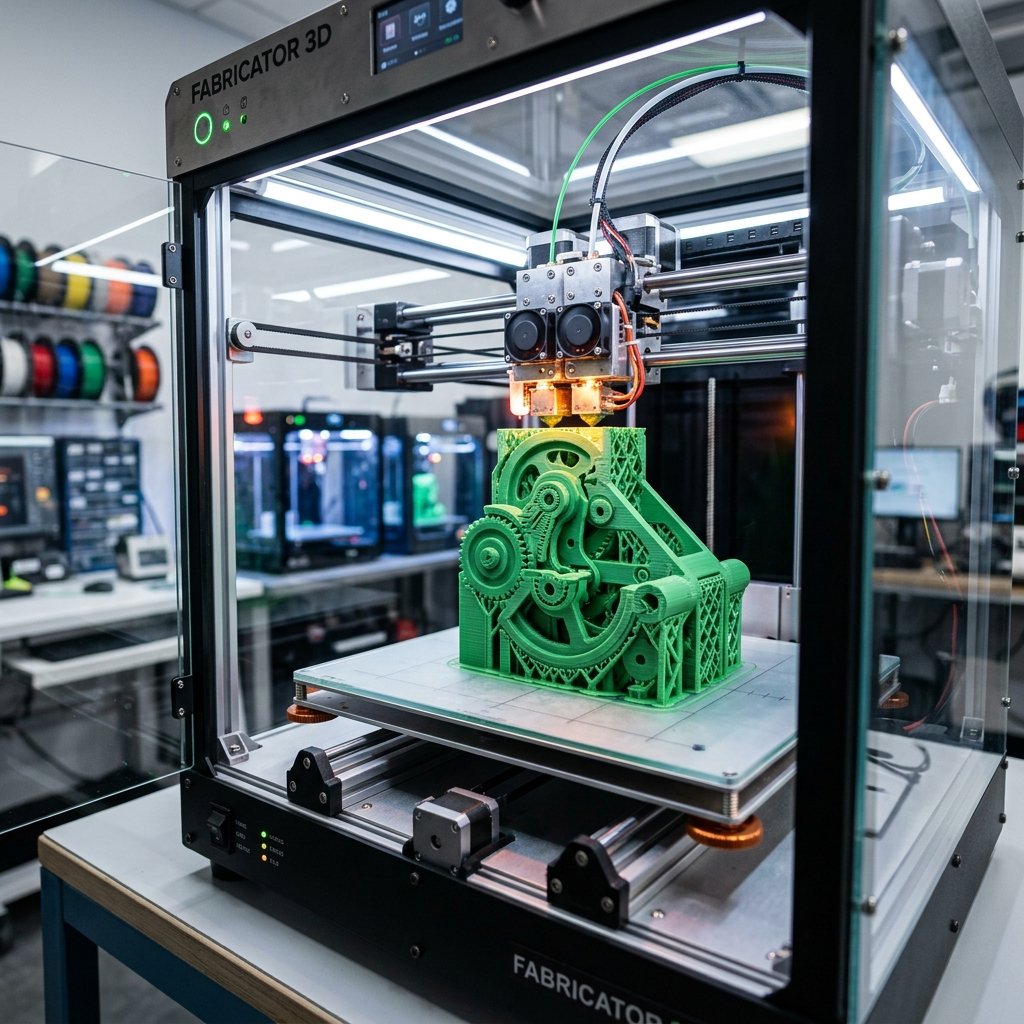
Navigating the landscape of custom manufacturing can be a daunting challenge. When you need to turn a digital 3D model into a physical prototype, you face a critical decision: should you use a large online automated 3D printing platform, or partner with a local, specialized agency? This comprehensive guide breaks down everything you need to know about selecting the best 3D printing service, evaluating quality, and aligning your project with the right manufacturing partner.
As the owner of 3D Print Book, I have spent years running a dedicated FDM printing farm, helping engineers, designers, and hobbyists bring their creations to life. Over this time, I have learned that the success of a print depends heavily on choosing the right partner. The manufacturing method, material expertise, and communication flow are just as critical as the printer itself. Let's delve into the mechanics of custom manufacturing to help you make an informed decision.
1. What is a 3D Printing Service?
A 3D printing service is an agency, bureau, or print farm that manufactures physical parts from digital 3D models (such as STL, STEP, or OBJ files). These services bridge the gap between digital CAD design and physical reality, giving customers access to professional-grade equipment without the massive upfront capital investment of buying and maintaining high-end machinery.
Professional services do much more than simply hit "print" on a machine. When you submit a project, a quality service will handle several key stages:
- Design for Manufacturability (DFM) Assessment: Reviewing the geometry of your file to ensure it can be printed reliably without layer separations, extreme overhangs, or structural weak points.
- Material Optimization: Advising on whether your functional parts need the rigid strength of PLA, the weather resistance of PETG, the thermal stability of ABS, or the rubbery flexibility of TPU.
- Slicing and Machine Preparation: Choosing optimal infill densities, wall line counts, layer heights, and support orientations to balance strength, weight, cosmetic finish, and printing cost.
- Post-Processing and Quality Control: Carefully removing support structures, sanding rough surfaces, and conducting dimensional inspection to ensure the finished parts match your design specifications.
By leveraging a custom bureau, individuals and businesses can access a range of industrial and desktop machines tailored to their specific applications, from rapid prototyping to short-run end-use production.
2. Local vs. Online 3D Printing Services
Choosing between a local printing hub and a large-scale online automated platform is the first structural decision you must make. Large online services operate massive automated factories with hundreds of printers, offering instant online quoting algorithms. Local agencies, on the other hand, focus on personalized human consultation, fast local pickups, and custom tailoring for complex requirements.
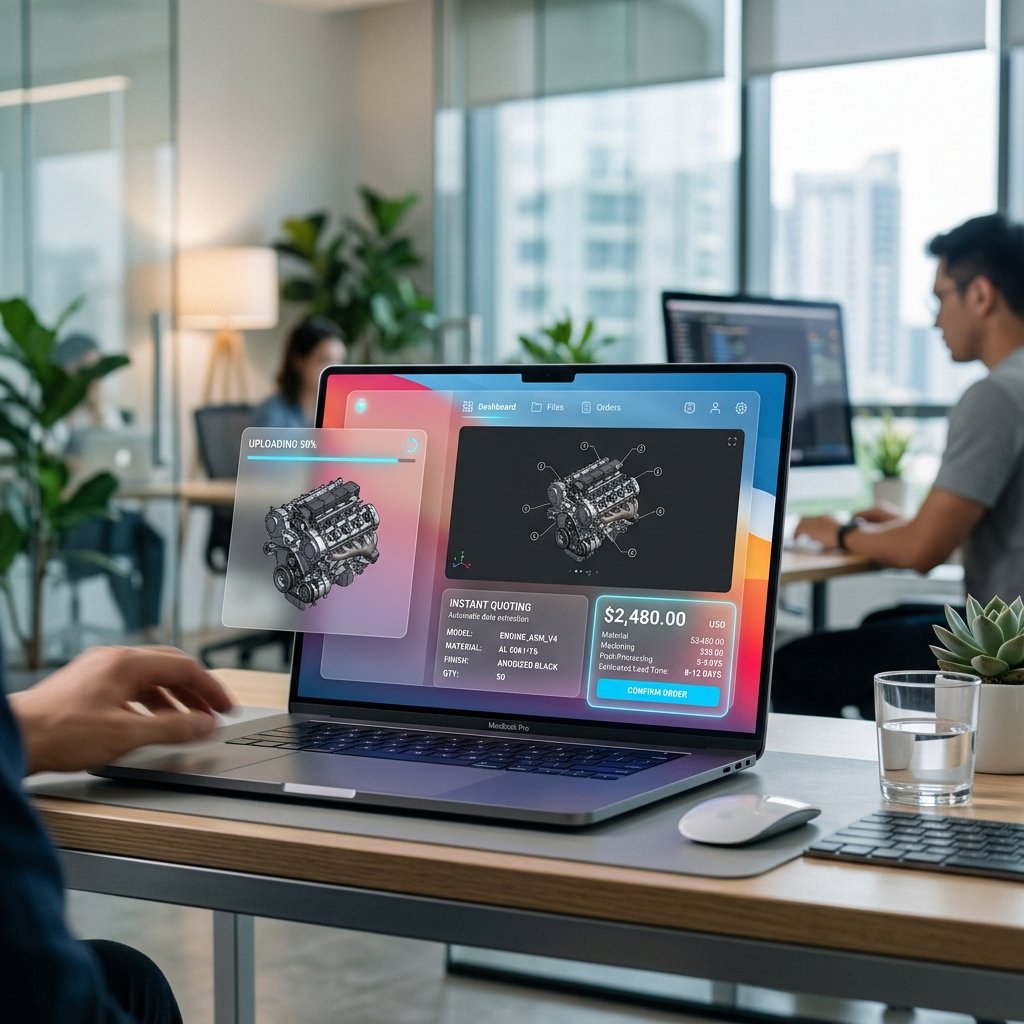
The Case for Online 3D Printing Platforms
Online platforms are designed for speed and convenience during the early design phases. You drag and drop your STL file, choose your parameters, and receive an instant quote in seconds. These platforms are excellent when you have simple models, need immediate pricing for a budget check, or require high-volume production across standard materials.
However, the automated nature of online services comes with major trade-offs. The automated DFM checkers are software algorithms that frequently miss subtle design errors, such as interior cavities that cannot drain support material or weak orientation angles. Furthermore, you rarely get to speak with the actual technician running the printer. If a print fails or has minor defects, it is typically shipped to you regardless, requiring a lengthy customer support cycle to request a reprint.
The Case for Local 3D Printing Agencies
Local agencies operate on a relationship-based model. When you upload a file to a local service, a human engineer reviews it. They can spot design flaws that automated software misses and call you directly to discuss modifications. Local hubs allow you to physically handle material samples before printing, ensuring you select the correct filament flex and surface texture. Furthermore, if you are working within tight deadlines, local services eliminate shipping delays completely—you can simply drive to the shop and pick up your parts the same day they are finished.
For functional prototyping and engineering components, the human touch of a local technician is invaluable. They can adjust print parameters on the fly, orient the parts manually to ensure maximum load-bearing capacity along the layer lines, and offer custom post-processing advice.
Maker's Workshop Note: An automated system checks if a file is mathematically printable, but a human technician checks if the part will actually perform in the real world. For functional mechanical assemblies, the design feedback from an experienced local operator is worth far more than a few seconds saved in quoting.
Comparison Matrix: Local vs. Online Services
To help you decide which approach fits your budget and timeline, here is a detailed breakdown of the differences between the two business models:
| Feature | Online Platforms | Local Agencies |
|---|---|---|
| Quoting Speed | Instant (automated algorithms) | Quick (usually within a few hours, done by engineers) |
| Customer Support | Ticket-based, generic emails | Direct phone, email, or in-person consultation |
| DFM File Review | Software-based (misses functional load checks) | Human expert inspection (checks function and strength) |
| Shipping & Delivery | Requires shipping (days to weeks, customs potential) | Same-day local pickup or next-day local courier |
| Material Sampling | Not possible (photos only) | Physical inspection of material samples in-studio |
| Complex Assemblies | Difficult to coordinate custom tolerances | Excellent (technicians can test-fit parts locally) |
| Prototyping Iterations | Slow feedback loop between revisions | Extremely fast (print, test, modify, and reprint in 24 hours) |
3. Key Factors in Evaluating a Print Service
Once you decide on the model that fits your workflow, you must evaluate the technical capabilities of the service provider. Not all print farms are created equal. To ensure your functional parts perform as expected, you must assess material selection, machine precision, scaling capabilities, and customer feedback loops.
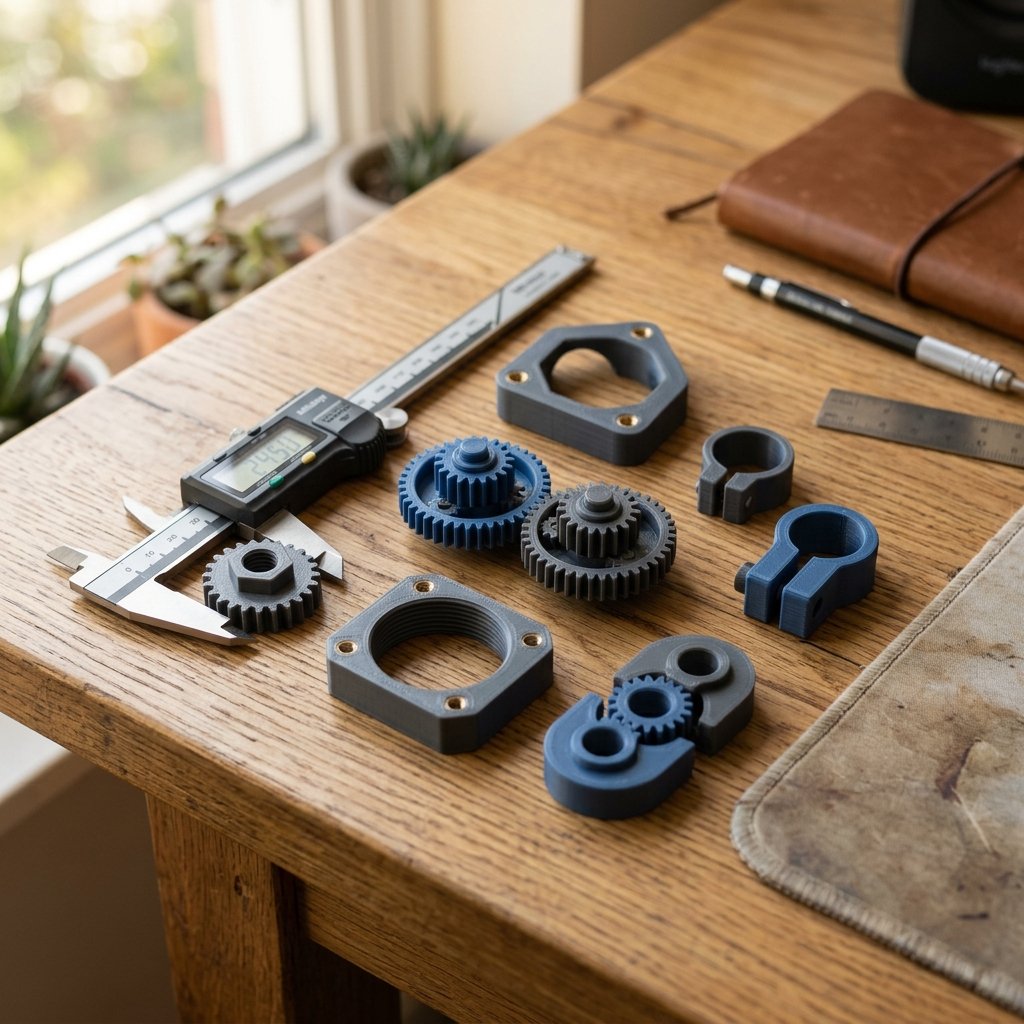
Material Selection and Expertise
A professional service must display deep expertise in a variety of polymer filaments. The choice of material dictates the physical limits of your part. Ensure the provider works with and understands the specific properties of:
- PLA (Polylactic Acid): The industry standard for visual models, architectural mockups, and early-stage form concepts. It offers high detail and low warping but lacks thermal and impact resistance.
- PETG (Polyethylene Terephthalate Glycol): The workhorse of functional prototyping. It combines the printing ease of PLA with high impact resistance, slight flexibility, and excellent outdoor UV resistance.
- ABS (Acrylonitrile Butadiene Styrene): Essential for parts requiring high heat resistance (up to 100°C) and structural toughness. It requires specialized heated enclosures to print without layer delamination.
- TPU (Thermoplastic Polyurethane): A flexible rubber-like material ideal for seals, gaskets, protective sleeves, and vibration dampening components. Printing TPU requires specialized direct-drive extruders and slow print speeds.
If a service tells you they can print everything in PLA and it will work for your automotive engine bay prototype, run away. A qualified bureau will ask questions about operating temperatures, chemical exposure, and mechanical stress before recommending a filament.
Machine Calibration and Dimensional Precision
Desktop 3D printers are highly sensitive machines. A minor misalignment in belt tension, a worn brass nozzle, or incorrect extrusion multipliers can result in dimensional deviations of several millimeters. When printing interlocking assemblies or functional enclosures, precision is paramount. Ask the service about their tolerances. A well-calibrated professional FDM setup should easily hold tolerances of ±0.1 mm to ±0.2 mm depending on part size and geometry.
Batch Scaling and Volume Discounts
Rapid prototyping is excellent, but what happens when you need to transition to low-volume production? If you need 50, 100, or 500 units of a component, check if the service has a large enough print farm to scale production. Large print farms can distribute the job across multiple identical machines, maintaining consistent quality while drastically shortening lead times. Furthermore, verify that they offer batch discounts, as print preparation times (slicing, bed preparation) decrease per unit when scaling.
💡 Expert Advice: Optimize Your File for the Best Price
You can drastically reduce the cost of your 3D printing service order by designing with FDM in mind. Minimize overhang angles past 45 degrees to eliminate the need for support structures, which save both printing time and post-processing labor. Additionally, design flat base surfaces to ensure strong bed adhesion and reduce the risk of warping during the print cycle.
4. Why Partner with 3D Print Book?
At 3D Print Book, we focus exclusively on delivering premium FDM 3D printing and design services. We operate a specialized local print farm optimized for engineering polymers. Unlike automated online platforms, we believe in the power of direct human collaboration. Every CAD file submitted to us is analyzed by an experienced engineer, ensuring we optimize print orientation for physical strength rather than raw material savings.
Whether you need a quick concept model in PLA, a rugged outdoor bracket in PETG, a high-temp enclosure in ABS, or a flexible gasket in TPU, we have the specialized equipment and materials to make it happen. We work closely with our clients to verify tolerances, test-fit multi-part assemblies, and deliver prototypes that perform under real-world testing conditions.
Explore our completed works in our portfolio section to see the precision and quality we achieve, or head over to our services page to learn more about our manufacturing capabilities.
5. Frequently Asked Questions (FAQ)
Q1: What file formats do you accept for custom printing?
We primarily accept STL, STEP, and OBJ files. For functional engineering parts, we highly recommend submitting STEP files, as they preserve true curved geometries and solid body data far better than tessellated STL meshes, resulting in smoother circles and tighter fitments.
Q2: Can FDM prints hold tight tolerances for threaded parts?
Yes, FDM printers can produce functional threads, but design adjustments are required. We recommend using coarse threads (at least 1.5mm pitch) and designing a small clearance tolerance (typically 0.15mm to 0.3mm) between the male and female threads. Alternatively, we can heat-press brass threaded inserts post-print for maximum durability.
Q3: How long does a typical custom order take to complete?
Lead times depend on part volume and printing hours. Most single rapid prototyping orders are completed and ready for pickup or shipping within 24 to 48 hours. Larger production batches of 100+ parts typically require 3 to 5 business days.
Q4: Why do you print exclusively with FDM technology?
We choose to focus 100% of our operations on FDM (Fused Deposition Modeling) because it is the most reliable, cost-effective, and mechanically robust technology for structural and functional prototypes. FDM allows us to print with real engineering thermoplastic polymers (like ABS and PETG) that can withstand functional mechanical stresses, weather, and impacts, whereas resin-based SLA prints tend to be brittle and degrade under UV light.
Q5: Do you offer local pickup for urgent orders?
Absolutely. If you are located nearby, you can bypass shipping times entirely. Once your print job is finished, you will receive a notification, and you can pick up your order directly from our studio at a pre-arranged time.
About the Author: Dinu Suciu
I am Dinu Suciu, the lead technician and owner of 3D Print Book. With a deep passion for mechanical design and rapid prototyping, I have dedicated years to mastering FDM 3D printing and CAD optimization. My goal is to help designers, engineers, and creators bridge the gap between digital design and real-world execution. If you have questions about file prep or material selection, feel free to contact me directly through our contact page.