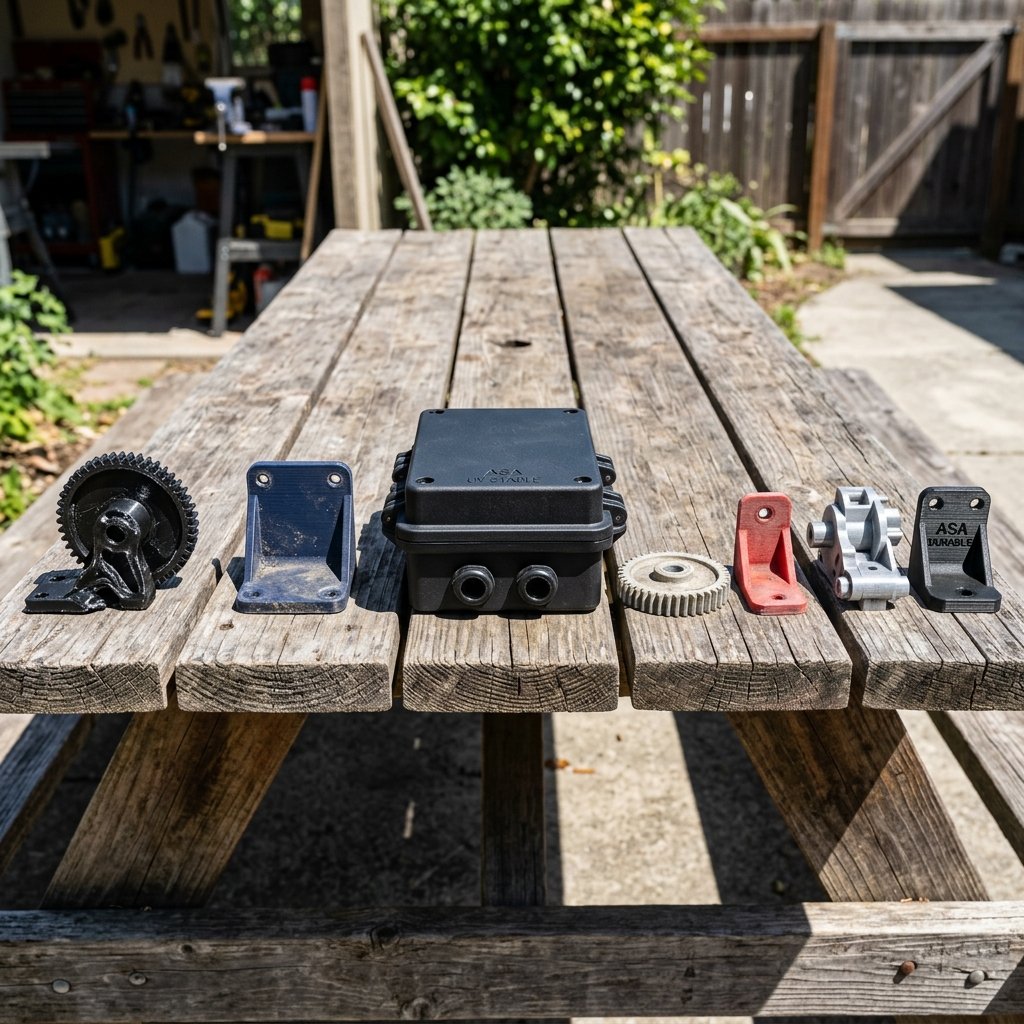
Few engineering challenges in Fused Deposition Modeling (FDM) 3D printing are as demanding as creating parts destined for the outdoors. Whether you are printing weather station housings, custom garden tools, structural brackets for security cameras, or custom automotive accessories, your prints must withstand a brutal barrage of environmental forces. From intense ultraviolet (UV) radiation and high ambient temperatures to moisture absorption and freezing cycles, the outdoors is a hostile environment for thermoplastic parts.
As a 3D printing specialist who has operated an FDM print farm for years, I have seen far too many outdoor projects fail because of poor material selection. Makers often print complex parts in whatever filament they have loaded in their printer, only to watch them warp into useless shapes under the summer heat or crumble to pieces at the first frost. Understanding the physics of polymer weathering is essential if you want your functional parts to survive the elements. In this detailed guide, I will share my hands-on experiences and technical insights comparing the three most common FDM filaments—PLA, PETG, and ASA—under real-world outdoor weathering conditions.
What is the best 3D printing filament for outdoor use?
ASA (Acrylonitrile Styrene Acrylate) is the top choice for outdoor FDM prints due to its high resistance to UV radiation, weathering, and heat tolerance up to 95°C. Unlike other thermoplastics that degrade rapidly when exposed to sunlight, ASA maintains its mechanical strength, impact resistance, and color profile over years of direct environmental exposure.
To understand why ASA is the undisputed champion of outdoor applications, we have to look closely at its chemical composition. ASA was developed specifically as an alternative to ABS (Acrylonitrile Butadiene Styrene). While ABS is an incredibly strong and popular engineering filament, its Achilles\' heel is the butadiene component. Butadiene contains chemically vulnerable double carbon-carbon bonds. When exposed to the UV radiation present in sunlight, these double bonds undergo photo-oxidative degradation. The polymer chains break down, leading to severe yellowing, surface micro-cracking, and a catastrophic loss of impact resistance. In short, ABS parts left outdoors quickly become brittle and fail under minimal load.
ASA solves this fundamental structural weakness by replacing the butadiene rubber phase with a saturated acrylic ester rubber (specifically, an acrylate-styrene-acrylonitrile matrix). Because the acrylic rubber contains no double bonds, it is highly resistant to ultraviolet radiation. UV rays pass through or bounce off the polymer chains without breaking them down. Furthermore, ASA exhibits exceptional thermal properties. With a glass transition temperature (Tg) of approximately 95°C to 100°C, it remains structurally rigid under extreme thermal loads. On a hot summer day, a dark-colored plastic part mounted on an exterior wall or inside a car dashboard can easily reach temperatures of 70°C to 80°C. ASA handles these conditions with ease, whereas common consumer filaments soften and deform under their own weight.
In addition to its thermal and UV resistance, ASA has a low water absorption rate. Water molecules cannot easily penetrate its polymer matrix, preventing the hydrolytic degradation that plagues other plastics. When combined with its inherent chemical resistance to acids, salts, and oils, ASA emerges as the most robust, long-term solution for outdoor prototyping and production. Over the years, I have manufactured outdoor enclosures, vehicle trim components, and marine brackets. While other materials deteriorated within months, the parts I printed using high-quality ASA filament have endured years of harsh Romanian winters and blistering summers without showing a single sign of physical degradation.
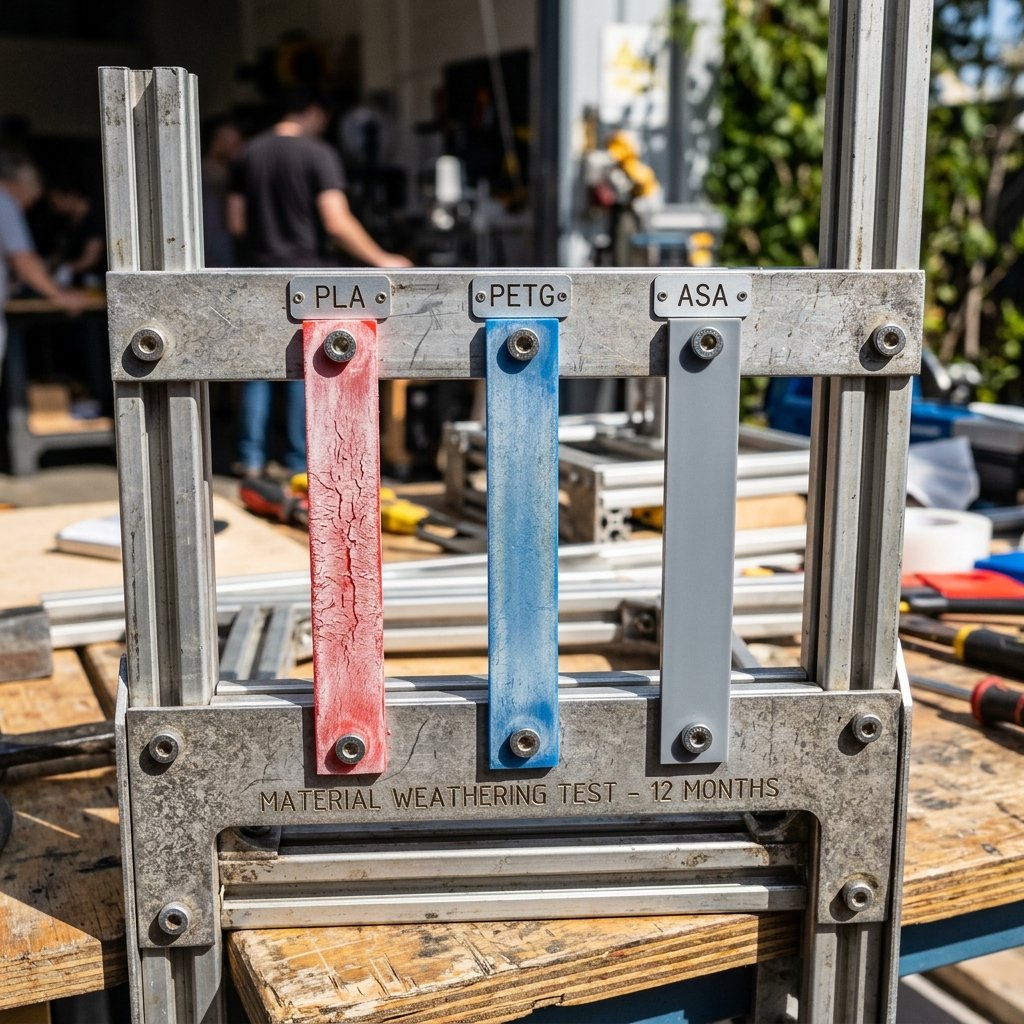
PLA vs. PETG vs. ASA for outdoor durability (weathering and temperature limits)
While PLA degrades rapidly under sunlight and PETG offers moderate heat and UV resistance, ASA remains highly durable and structurally sound under prolonged outdoor exposure. Selecting the right material requires balancing the specific mechanical demands, thermal exposure, and ease of printing for each project.
To help you decide which material fits your specific outdoor project, let us analyze PLA, PETG, and ASA across four critical environmental pillars: UV degradation, thermal performance, water resistance, and mechanical durability.
1. Ultraviolet (UV) Radiation and Solar Degradation
Ultraviolet radiation from the sun is the most destructive force acting on outdoor plastics. UV light carries enough energy to excite polymer molecules and trigger photo-oxidation, which cleaves the long macromolecular chains into shorter, weaker segments.
- PLA (Polylactic Acid): PLA is a bio-polyester derived from fermented plant starch. Although it is technically biodegradable under specific industrial composting conditions, it does not dissolve in rain or rot in the soil overnight. However, its UV resistance is poor. When exposed to direct sunlight, PLA undergoes rapid photo-degradation. The polymer chains break, causing the material to lose its elasticity and become highly brittle. A PLA bracket that feels rigid on day one will easily snap after three to six months of solar exposure.
- PETG (Polyethylene Terephthalate Glycol): PETG offers moderate UV resistance. It is structurally more stable than PLA and ABS under sunlight. While it will not crumble immediately, prolonged exposure over several years will cause minor photo-degradation. The material will gradually yellow, lose its gloss, and experience a reduction in impact strength. For semi-shaded environments or projects with a life cycle of 1–2 years, PETG is a viable, budget-friendly alternative.
- ASA (Acrylonitrile Styrene Acrylate): As discussed, ASA is structurally immune to standard solar UV levels. The saturated acrylate rubber matrix protects the chemical bonds, ensuring the printed part retains its tensile strength, impact resistance, and aesthetic color for years. It is the only material of the three that can be considered truly UV-stable.
2. Thermal Limits and Heat Deflection Temperature (HDT)
Thermal stability is just as important as UV resistance. If a filament cannot withstand the ambient temperature of its environment, it will fail regardless of how UV-resistant it is.
- PLA: PLA has a very low glass transition temperature (Tg) of 55°C to 60°C. In the 3D printing world, this means the plastic begins to soften and transition from a hard, glassy state to a rubbery, pliable state at relatively low temperatures. If you leave a PLA print inside a closed vehicle on a sunny day, or mount a dark-colored PLA bracket on a sun-drenched brick wall, it will deform, bend, and warp under its own weight. PLA is entirely unsuitable for any outdoor application exposed to direct sunlight or warm climates.
- PETG: PETG has a Tg of 75°C to 80°C. This is a significant improvement over PLA. Under standard outdoor conditions, ambient temperatures rarely reach the threshold where PETG begins to soften. However, caution is still required for high-load structural parts or objects placed behind glass (such as inside a car or a greenhouse) where localized temperatures can exceed 75°C. For a deeper dive into materials like PETG and ABS, check out our comprehensive FDM 3D Printing Materials Comparison.
- ASA: ASA boasts a high Tg of 95°C to 100°C. This exceptional thermal limit makes it incredibly safe for almost any outdoor climate. It will easily withstand the hottest summer days, high-radiation environments, and even localized heat from motors or electronics enclosures.
3. Moisture Absorption and Hydrolytic Stability
Outdoors, parts are subject to rain, dew, snow, and high relative humidity. Thermoplastics are hygroscopic to varying degrees, meaning they absorb moisture from their surroundings, which can lead to swelling, internal stress, and degradation.
- PLA: While PLA does not dissolve in water, its hygroscopic nature allows it to absorb significant amounts of ambient moisture over time. When water molecules penetrate the polymer, they can cause micro-swelling. During winter, this absorbed water freezes and expands, creating internal micro-fractures that accelerate structural breakdown.
- PETG: PETG is highly hydrophobic once printed, offering excellent barrier properties against water and chemical solvents. However, raw PETG filament is extremely hygroscopic before printing. If printed wet, moisture trapped in the filament vaporizes in the hotend, leading to severe stringing, bubbling, and weak layer adhesion. To avoid these issues, always dry your filament before printing, as detailed in The Ultimate FDM 3D Printing Filament Drying Guide. Once successfully printed, PETG parts are highly stable in wet environments.
- ASA: ASA has incredibly low moisture absorption. Water cannot easily penetrate the dense polymer matrix. This resistance to water absorption ensures that ASA parts maintain their mechanical dimensions and internal structural integrity, even when submerged or subjected to continuous rain and humidity.
4. Mechanical Integrity and Impact Resistance
Outdoor parts are often functional, meaning they must endure mechanical stresses, wind loads, and physical impacts.
- PLA: PLA is highly rigid and has excellent tensile strength, but it is extremely brittle. It has very low impact resistance. Under cold outdoor conditions, its brittleness increases, making it prone to shattering under sudden loads.
- PETG: PETG strikes a great balance. It is slightly flexible, allowing it to bend rather than snap under load. Its impact resistance is far superior to PLA, making it highly durable against physical shocks and vibrations.
- ASA: ASA is an engineering-grade plastic with high mechanical strength and exceptional impact resistance. It behaves similarly to ABS, providing robust physical durability. It does not shatter under sudden loads, making it the ideal choice for heavy-duty brackets, protective housings, and mechanical assemblies.
| Property | PLA (Polylactic Acid) | PETG (Polyethylene Terephthalate Glycol) | ASA (Acrylonitrile Styrene Acrylate) |
|---|---|---|---|
| Glass Transition Temp (Tg) | 55°C - 60°C (Low) | 75°C - 80°C (Moderate) | 95°C - 100°C (High) |
| UV / Sunlight Resistance | Poor (Brittle, degrades in months) | Moderate (Yellowing and minor loss of strength) | Outstanding (No degradation, color stable) |
| Moisture Resistance | Moderate (Hygroscopic, freeze-thaw cracking) | Excellent (Very hydrophobic when printed) | Outstanding (Extremely low water absorption) |
| Impact Resistance | Low (Brittle, shatters easily) | High (Flexible under load, tough) | Outstanding (High impact strength, rigid) |
| Warping Tendency during Print | Minimal (Very easy to print) | Low to Moderate (Highly manageable) | High (Requires enclosure and heated bed) |
| Recommended Applications | Temporary prototypes, indoor models | Semi-shaded outdoor parts, brackets, containers | Long-term outdoor brackets, automotive, marine |
Tips for printing outdoor-grade ASA filament (Enclosures and warping prevention)
Successfully printing ASA requires an enclosed chamber to maintain stable ambient temperatures and a properly prepared print bed heated to 100°C–110°C to prevent warping. Because ASA undergoes significant thermal contraction, controlling the cooling process is critical to preventing layer separation and bed detachment.
While ASA is undoubtedly the best filament for outdoor use, it is also the most challenging of the three to print. Unlike PLA, which prints easily on almost any machine, or PETG, which only requires minor setting adjustments, ASA is highly sensitive to temperature fluctuations. When extruded plastic cools, it contracts. Because ASA has a high coefficient of thermal expansion, the rate of contraction is severe. If the upper layers of a print cool too quickly while the lower layers are kept warm by the heated bed, the resulting internal thermal stresses will cause the corners of the part to lift off the build plate (warping) or cause the layers to split apart (delamination).
To achieve perfect, structurally sound ASA prints, you must optimize your printing environment and slicer settings. Here are my top professional guidelines for printing ASA on FDM machines:
1. Implement an Enclosed Build Chamber
Printing ASA on an open-frame 3D printer is a recipe for failure. Even a slight draft from a window or an air conditioner will cause rapid, uneven cooling, destroying your print. An enclosure is mandatory. The enclosure traps the heat radiating from the print bed, creating a warm micro-climate (ambient temperature of 40°C to 50°C). This high ambient temperature slows down the cooling rate of the extruded plastic, allowing the molecular chains to bond slowly and relieving internal thermal stresses. If your printer does not have a native enclosure, you can place it inside a dedicated zippered tent or build a custom enclosure from acrylic panels.
2. Optimize Bed Temperature and Adhesion
Because ASA contracts heavily, bed adhesion is under constant mechanical tension. Your print bed must be heated to 100°C to 110°C to keep the initial layers above their glass transition temperature. I highly recommend using a textured PEI spring steel sheet. ASA bonds incredibly well to hot PEI. In fact, it can bond too well, risking damage to the PEI coating when you try to remove the cooled print. To prevent this, apply a thin layer of glue stick or a specialized 3D printing adhesive spray. This acts as a release agent when cold, while helping to secure the print when hot. For a comprehensive guide on keeping your prints anchored, read How to Improve 3D Print Bed Adhesion.
3. Control the Cooling Fan
Rushing the cooling process is the fastest way to ruin an ASA print. For structural outdoor parts, the cooling fan should be turned off completely for the first 3 to 5 layers. For the remaining layers, keep the fan speed between 10% and 20%. Only increase the fan speed for bridges or very fine details. The goal is to let the plastic cool as slowly as possible to maximize molecular diffusion across the layer lines. Excessive cooling will lead to weak layer fusion, causing the print to split along the Z-axis under minimal load.
4. Manage Fumes and Ventilation
It is important to note that ASA releases styrene gases during printing. Styrene fumes have a strong, sweet plastic smell and can cause headaches, dizziness, and respiratory irritation in unventilated spaces. Always print in a well-ventilated room, or use a printer equipped with an active carbon filtration system (such as a HEPA/Carbon filter combo). Keep pets and family members out of the printing room during long ASA print jobs.
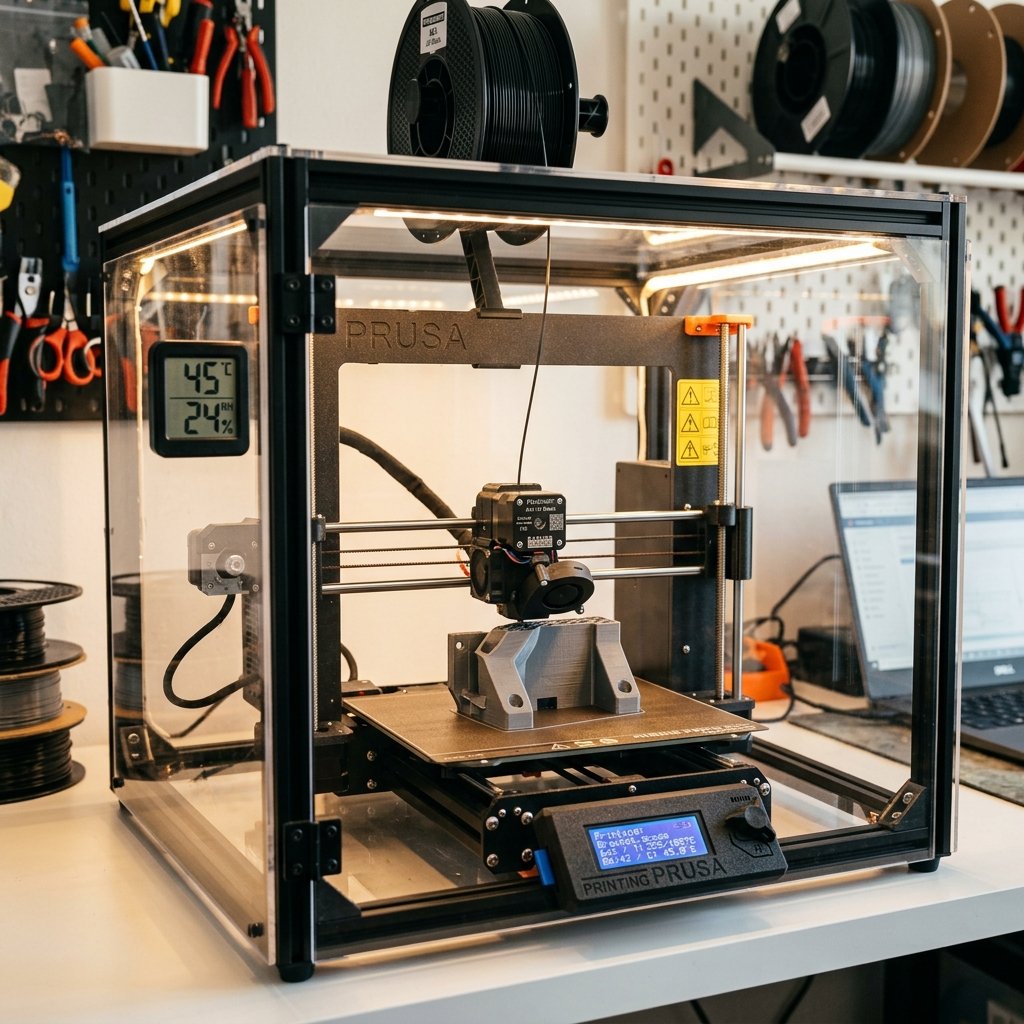
Maker's Workshop Note: When printing ASA for structural outdoor applications, orient the part to minimize the tension on layer bounds. Because FDM parts are inherently anisotropic, they are weakest along the Z-axis. Aligning your print so that the primary mechanical forces pull along the X and Y axes will prevent sudden failure under load, even after years of weathering.
Conclusion and Final Recommendations
When selecting the best 3D printing filament for outdoor use, the choice ultimately depends on the lifetime expectations, environmental exposure, and mechanical loads of your part. If you need a temporary outdoor jig or a model that will only remain outdoors for a few weeks in mild weather, PLA is acceptable due to its ease of printing, though you must paint or coat it to slow down UV degradation. For moderate outdoor use in semi-shaded areas, PETG offers an outstanding, easy-to-print, and highly affordable solution that resists water and moderate heat without warping issues.
However, if you are manufacturing functional, long-term outdoor parts that must endure direct sunlight, freezing winters, and high temperatures, ASA is the absolute best choice. Despite the steep learning curve and the requirement of an enclosed printer, the unparalleled UV stability, high thermal resistance, and exceptional impact strength of ASA make it the ultimate engineering material for outdoor FDM prints. Invest the time to calibrate your enclosure, bed adhesion, and cooling settings, and you will produce robust, professional-grade parts that stand the test of time.
Frequently Asked Questions
Can I use PLA for temporary outdoor prints?
Yes, you can use PLA for temporary outdoor applications, but it is not recommended for long-term use. PLA degrades under UV radiation, becoming brittle over time. More importantly, its low heat deflection temperature of 55°C means it will soften and deform on hot summer days.
Does PETG degrade in sunlight?
PETG has moderate resistance to UV radiation and weathering. While it performs significantly better than PLA and ABS, prolonged exposure to sunlight over several years will eventually lead to slight yellowing, micro-cracks, and a reduction in impact strength.
Why is ASA harder to print than PETG?
ASA has a high rate of thermal contraction, which causes significant warping and layer delamination if printed in an open environment. It requires an enclosed chamber to keep the ambient temperature stable, a high bed temperature of 100°C–110°C, and minimal or no cooling fan usage.
Is ABS better than ASA for outdoor use?
No, ASA is vastly superior to ABS for outdoor applications. ABS contains butadiene rubber, which is highly sensitive to UV radiation and degrades quickly under sunlight. ASA replaces butadiene with acrylic rubber, making it highly UV-resistant and color-stable.
Do I need a special nozzle to print ASA?
No, a standard brass nozzle is perfectly fine for printing pure ASA. However, since ASA requires high printing temperatures of 240°C–260°C, you must ensure your hotend is equipped with an all-metal heatbreak. Traditional PTFE-lined hotends can degrade and release harmful fumes above 240°C.